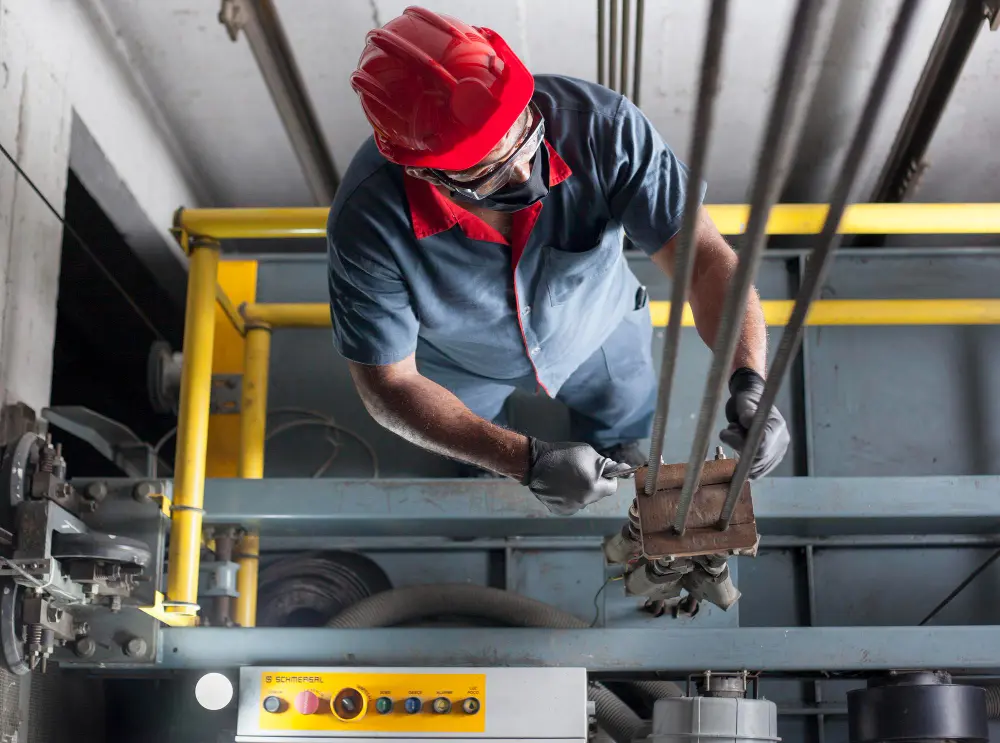
Every workplace that uses lifting equipment carries a responsibility to protect workers and maintain safe operations.
Jib Crane Component Maintenance for Safe Lifting Systems is very important. A jib crane repair is designed to lift and move loads in a controlled and safe way. However, it can only do this when all its parts are working properly. If even one component starts to fail, the safety of the entire lifting system is reduced. Over time, small problems become large risks. These risks can lead to injuries, damage to materials, lost work time, and violations of safety rules.
Therefore, maintenance should never be treated as optional. Instead, it should be seen as a core part of daily operations. A proper maintenance program protects people, protects equipment, and protects the business from unexpected shutdowns.
In addition, regular maintenance makes equipment last longer. When components are cleaned, adjusted, and repaired early, they do not wear out as quickly. As a result, companies save money and avoid emergency repairs that cost far more than routine service.
Why Safe Lifting Depends on Component Maintenance
A jib crane is not a single machine. It is a system made up of many connected parts. Each part supports the others. When one part weakens, the entire system becomes unstable.
For example, if the hoist works well but the brake is worn, the load may not stop smoothly. If the structure is strong but the electrical controls fail, the crane may move without warning. Therefore, safety depends on the condition of every single component.
This is why Jib Crane Component Maintenance for Safe Lifting Systems focuses on each part separately. It not only looks at how the crane moves. It looks at why it moves safely and what could stop it from working correctly.
When maintenance is ignored:
- Equipment becomes unpredictable
- Load control becomes weaker
- Structural stress increases
- Failure risk rises
- OSHA compliance becomes difficult
However, when maintenance is done correctly:
- Equipment runs smoothly
- Operators work with confidence
- Breakdowns are reduced
- Safety improves
- Compliance becomes easier
As a result, component maintenance becomes a direct part of workplace safety.
How Small Problems Turn Into Serious Hazards
Many crane failures do not happen suddenly. Instead, they develop slowly. A small crack grows larger. A loose wire becomes exposed. A worn brake loses stopping power. These problems often start quietly. Therefore, they are easy to ignore.
However, when ignored, they combine and create serious hazards. For example:
- A worn hoist creates extra stress on the structure
- A weak brake increases shock loads
- Electrical faults reduce control accuracy
- Structural fatigue weakens support points
Over time, these issues increase the chance of accidents. As a result, routine inspection and early correction are the only safe approaches.
Understanding the Main Components of a Jib Crane
To maintain a jib crane properly, it is important to understand its main parts. Each part has a role in lifting, guiding, and stopping loads.
1. Structural Components
These parts support the entire crane:
- Mast or wall-mounted column
- Boom (horizontal arm)
- Base plates and anchor bolts
- Welded joints and support brackets
These parts carry the weight of the crane and the load. If any of them fail, the crane may collapse or shift. Therefore, structural checks are always critical.
Common problems include:
- Rust and corrosion
- Fatigue cracks
- Loose anchor bolts
- Bent or misaligned beams
These problems often develop slowly. That is why visual and mechanical inspections are needed.
2. Hoist System
The hoist lifts and lowers the load. It includes:
- Motor
- Gear system
- Wire rope or load chain
- Drum or sprocket
The hoist works under high stress. Because of this, wear is unavoidable. However, with proper maintenance, wear can be managed safely.
Signs of hoist problems include:
- Slow lifting
- Uneven motion
- Unusual noise
- Load slipping
When these signs appear, jib crane repair should be scheduled quickly to prevent further damage.
3. Trolley Assembly
The trolley allows the load to move horizontally along the boom. It includes:
- Wheels
- Bearings
- Guide rollers
- Mounting brackets
If the trolley movement is not smooth, load positioning becomes unsafe. Over time, poor movement increases stress on the structure.
4. Braking System
The brake controls stopping and holding loads. It prevents unwanted movement. A weak brake is one of the most dangerous faults in any lifting system.
Brake problems include:
- Delayed stopping
- Slipping under load
- Overheating
- Uneven wear
Because brakes protect both people and equipment, they must be checked often.
5. Electrical and Control Systems
Electrical systems include:
- Control panels
- Wiring
- Limit switches
- Emergency stop circuits
These parts control how the crane moves and stops. If they fail, the operator loses control. Therefore, electrical checks are just as important as mechanical ones.
Common issues:
- Loose connections
- Damaged insulation
- Faulty relays
- Slow response times
Why Component-Based Maintenance Works Best
A component-based approach examines each part separately. This is better than only checking how the crane operates as a whole.
This method works because:
- It finds problems early
- It prevents system-wide failure
- It improves repair accuracy
- It supports proper documentation
Therefore, jib crane component maintenance for Safe Lifting Systems is not about speed. It is about accuracy and prevention.
How Inspections Support Maintenance
Inspections help find problems before they become dangerous. They also create records that show compliance.
There are two main types of inspections:
Frequent Inspections
These focus on visible and operational issues such as:
- Hooks
- Chains and wire ropes
- Controls
- Brakes
They are usually done daily or weekly.
Periodic Inspections
These go deeper and include:
- Internal wear checks
- Structural measurements
- Electrical testing
- Load testing
They are done monthly, quarterly, or yearly, depending on usage.
Both types are necessary. One cannot replace the other.
How Poor Maintenance Creates Serious Safety Risks
When jib crane components are not maintained on time, problems slowly build up. At first, the crane may still work. However, it will not work as smoothly or as safely as it should. Because the changes happen slowly, many people do not notice them until the problem becomes serious.
For example, when lubrication dries out, friction increases. Because of this, parts wear faster. Then, worn parts place more stress on nearby components. As a result, damage spreads through the system. What started as a small issue turns into a large mechanical problem.
This is why jib crane component maintenance for safe lifting systems is about prevention. It stops problems early, before they affect safety or production.
If maintenance is ignored, the following risks increase:
- Sudden equipment failure
- Loss of load control
- Damage to products
- Injuries to workers
- Long shutdown periods
Therefore, regular maintenance is not only about compliance. It is about protecting people and keeping work running smoothly.
Why Maintenance Is Better Than Emergency Repair
Emergency repairs are expensive and disruptive. They happen when a problem is allowed to grow too large.
Maintenance prevents this by:
- Catching wear early
- Allowing planned downtime
- Reducing repair costs
- Improving equipment life
For example, replacing a worn brake pad during maintenance is simple and low-cost. Replacing a damaged brake system after failure is costly and dangerous.
This shows why maintenance is always the better solution.
Why Maintenance Improves Equipment Life
Equipment wears out faster when problems are ignored. Maintenance reduces this wear by:
- Keeping parts aligned
- Reducing friction
- Preventing overload
- Stopping corrosion
As a result, cranes last longer and perform better.
The Role of Professional Inspections
Professional inspections go beyond simple checks. They include:
- Measurement of wear
- Testing of electrical circuits
- Structural evaluation
- Load performance testing
These inspections identify issues that daily checks cannot find.
Transition to Systematic Maintenance Planning
Now that the risks and causes of failure are clear, the next step is to understand how maintenance should be planned and performed. Maintenance must be structured, scheduled, and documented.
This structure is what makes jib crane component maintenance for Safe Lifting Systems reliable and effective.
How a Proper Maintenance Process Should Be Followed
To keep a jib crane safe, maintenance must be planned and done in steps. It should never be rushed or done without records. Each step builds safety and reduces risk.
- First, the crane should be visually checked. This includes looking for rust, cracks, loose bolts, damaged wires, and unusual wear. Visual checks help catch early problems.
- Next, the mechanical parts must be examined. Bearings, brakes, chains, and wire ropes should be inspected for wear. If parts move roughly or make noise, they must be serviced.
- After that, electrical systems must be tested. Controls, emergency stops, and limit switches should be checked to make sure they respond quickly and correctly.
- Then, lubrication must be applied where needed. Proper lubrication reduces friction and slows down wear.
- Finally, all findings must be written down. Records prove that safety checks were done and help plan future work.
Because of this step-by-step method, jib crane component maintenance for Safe Lifting Systems becomes organized and reliable instead of reactive.
Keeping Jib Crane Components Well-Maintained for Safe and Reliable Lifting
Jib Crane maintenance for safe lifting systems is not about checking boxes. It is about understanding how each part affects safety. When maintenance is done with care, accidents are prevented, downtime is reduced, and compliance becomes easier.
If your facility uses jib cranes, now is the right time to review your maintenance program. Regular inspections, proper documentation, and timely jib crane repair protect workers and equipment. Schedule a professional evaluation and make safety a daily priority.
Frequently Asked Questions
Jib crane components should be checked daily with a quick visual inspection for damage, loose parts, or unusual sounds. A detailed inspection should be done monthly to examine the hoist, trolley, bearings, and electrical parts. A full professional inspection once a year is important to test load capacity and overall safety. This routine helps find small problems before they turn into serious risks.
The hoist, wire rope or chain, hook, and brake system needs the most attention because they carry the load. Bearings, trolley wheels, and pivot points also need regular checks and lubrication. Electrical controls and limit switches should be tested often to ensure safe and smooth operation.
Unusual noises, slow or jerky movement, visible cracks, rust, or bent parts are warning signs. Worn wire ropes, damaged hooks, or faulty controls also mean the crane is not safe to use. These issues should be fixed immediately to prevent accidents.
Lubrication reduces friction and wear on moving parts like bearings and gears. It also protects components from rust and overheating. Proper lubrication keeps the crane running smoothly and extends the life of its parts.
Maintenance records show when inspections and repairs were done. They help plan future servicing and prove safety compliance. Good documentation also improves accountability and overall crane safety.